DEVAPUJA
Reverence
Devapuja is worship and reverence. The teachings ask us to recognise what sustains us: air, water, the elements and the divine powers invoked through Vedic mantras. Gratitude begins with recognising how much we receive.
 VIHANGAM YOGAUSTRALIA
VIHANGAM YOG · THE TRADITION OF YAJNA
Join in the Vedic tradition of Yajna.
Offer with gratitude. Gather for the welfare of all.
01 / AT THE CENTRE
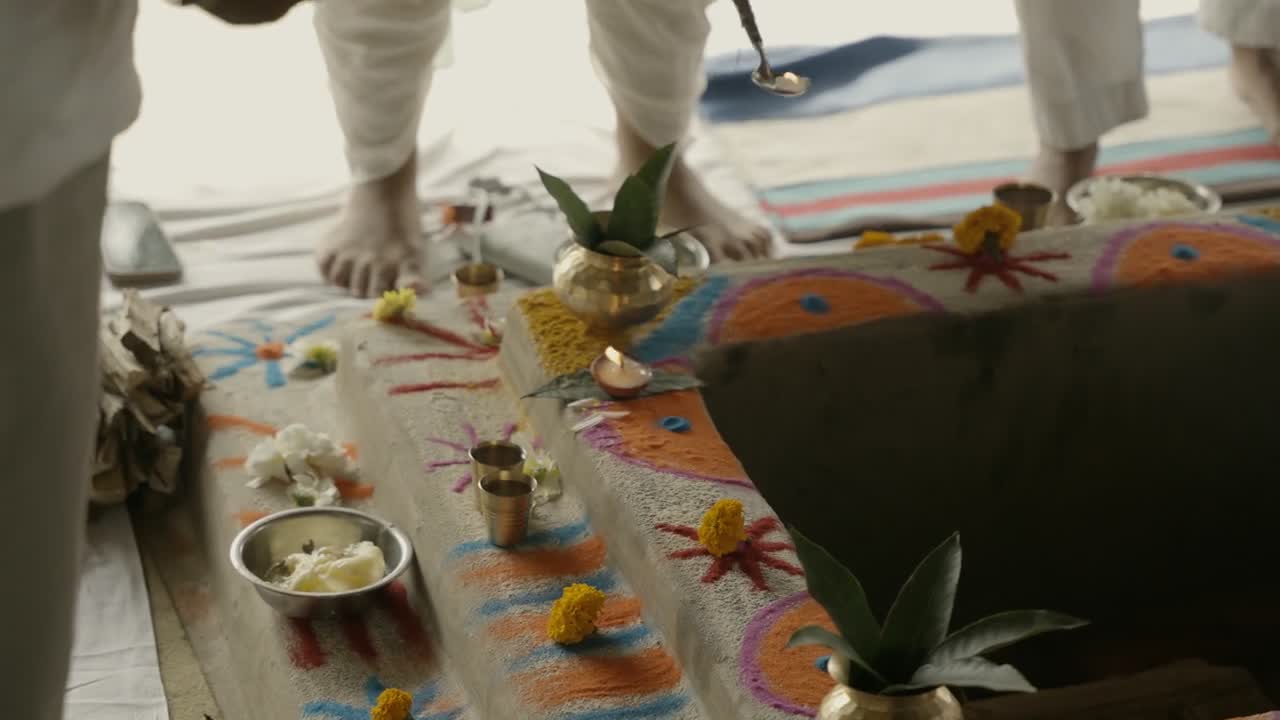
The Kund holds the fire into which Ahuti is offered with Vedic mantras. The prepared materials, the people seated around it and the recitation belong to one shared act of Yajna. The larger Kund shown here is from Kumbh; smaller Kunds are expected at our Sydney event.
 TOUCH A DETAIL TO EXPLORE
02 / A SHARED EXPERIENCE
Explore moments from the ASY gathering. The person leading a Yajna guides the order and participation on the day.
PREPARATION
Colour is placed on the stepped edges. Flowers and vessels are arranged by hand. The space is prepared with care before people gather around the fire.
03 / BEYOND THE VISIBLE
In the Vihangam Yog teachings, Yajna brings together Devapuja, Sangatikaran and Daan. Its meaning extends from the offerings at the Kund to how we fulfil our duties and care for others.
DEVAPUJA
Devapuja is worship and reverence. The teachings ask us to recognise what sustains us: air, water, the elements and the divine powers invoked through Vedic mantras. Gratitude begins with recognising how much we receive.
SANGATIKARAN
Sangatikaran means coming together. Yajna brings people into a shared undertaking for the welfare of all. This asks us to look beyond our own concerns and take responsibility for the life we share.
DAAN
Daan means giving. In the source teaching, offerings made with Shraddha and love sit alongside service and contribution. What we give, and the intention with which we give it, both matter.
KARTAVYABODH · UNDERSTANDING OUR DUTY
The teaching describes Yajna as Sakam Karma: action undertaken with worthy desires, bringing worldly responsibilities and spiritual development together. Amid distraction, it asks us to understand what our duty is.
Agni rises upwards. The teaching connects this movement with an expansion of awareness beyond a narrow concern for ourselves. The Ahuti and the mantras belong within that larger purpose.
The Rishis are described as mantra-drashtarah, seers of the mantras, realised in Samadhi. In this teaching, recitation invokes divine powers that are not visible to our senses. Yajna carries a living stream of knowledge from the Rishis; its meaning goes beyond repeating a sequence of words.
COME AS YOU ARE
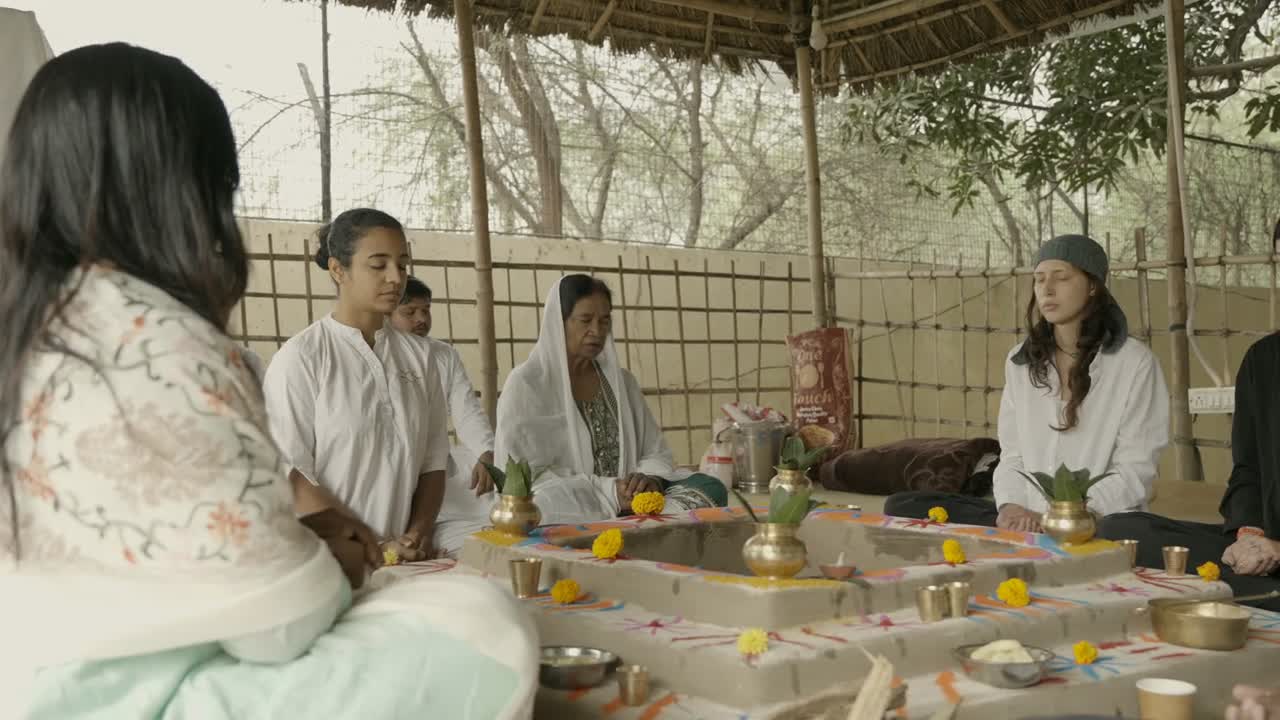
You don’t need to know every word or gesture before you arrive. Come with curiosity, and follow the guidance of the person leading the Yajna.
10:00 am to 1:30 pm
Sri Venkateswara Temple, Helensburgh
19 SEPTEMBER · HELENSBURGH
Choose a place for yourself or a Kund for your group. The contribution shown covers your chosen option, rather than a price per person.
A paired place is for one person on a shared Kund side. A Shared Kund accommodates up to four people; a Full Kund or Mukhya Yajman accommodates up to eight.
Bringing a larger group, or unsure which to choose? Speak with us.
Full event information ↗In this footage, participants use ladles and also offer small amounts from bowls of prepared material. These offerings are called ahuti. The ingredients and instructions for your gathering are provided by its organisers.
Walking around the Kunds is called parikrama. The footage here shows participants moving around the Kunds. Follow the guidance given at your Yajna for when and how to participate.
The ceremony is led. Listen and follow the guidance on the day; ask the organisers about language and participation before booking if you would like reassurance.
The footage was shared by the ASY Team in its Kumbh collection. It shows larger Kunds than those expected at the upcoming 51 Kund event in Sydney. It introduces the practice. The organisers will confirm the final Kund sizes and seating arrangements.